← Back to CSS
63

CSS architecture: methodologies, layers and team decisions

Learn how to structure CSS for real projects with naming conventions, cascade layers, component boundaries and review habits that reduce technical debt instead of feeding it.

📘 Theory

Core ideas worth applying immediately

These are practical architecture principles, not theory for theory's sake.

1

Think in layers, not in patches

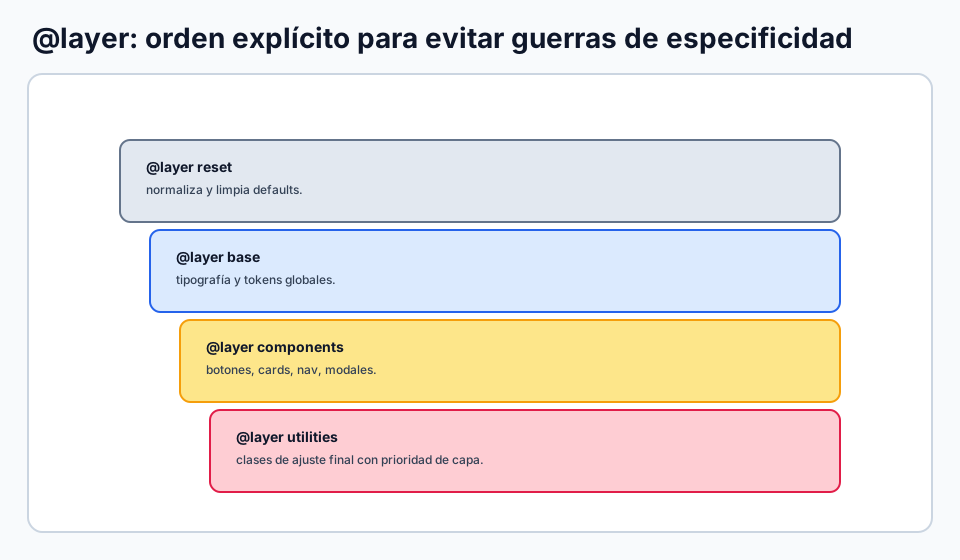
If every fix competes through specificity, the project becomes fragile. Review the cascade first, then use `@layer` to make priority explicit.

2

BEM as a contract

BEM forces intent into naming: block, element and modifier. That makes selectors more readable and avoids brittle chains such as `.sidebar ul li a.active`.

3

CSS Modules for isolation

In component-driven projects, CSS Modules reduce class collisions and make it easier to delete dead code with confidence.

4

Utility-first with discipline

Tailwind can speed up implementation, but it still needs semantic component boundaries and class-composition rules if you want it to stay maintainable.

5

Specificity is the real enemy

A strong architecture keeps specificity predictable so components can be extended without hacks, selector inflation or `!important` abuse.

6

Folder structure should age well

Separating base, layout, components, utilities and themes makes future maintenance much easier once the codebase grows beyond a few hundred lines.

7

Review CSS before merge, not after damage

A lightweight CSS review checklist catches mobile breakage, duplicated patterns, token drift and accessibility regressions early.

8

Consistency beats personal preference

Document the team standard and optimize for shared predictability, not individual style wars in pull requests.
A maintainable CSS architecture map

A simple structure helps the team decide where each rule belongs.

A healthy architecture separates concerns: global base, layout, components, utilities and themes. When all of that lives in one undifferentiated layer, the cascade quickly becomes unpredictable.

You do not need ideological purity. BEM for components, utilities for exceptions and `@layer` for priority can work together as long as the team shares clear rules.

  • Base: resets, typography and global defaults.
  • Layout: shells, wrappers, containers and major regions.
  • Components: buttons, cards, nav, forms and reusable UI blocks.
  • Utilities: small opt-in helpers for focused adjustments.
  • Themes: brand or color-mode variations.

BEM, CSS Modules and utility-first: when each one fits best

1

BEM works especially well when HTML is shared across different profiles and the team needs readable naming without extra tooling.

2

CSS Modules are a natural fit in component-based environments where local scoping reduces collisions by default.

3

Utility-first styling shines when implementation speed and token-driven consistency matter more than having separate authored CSS for every component.

Cascade layers in real projects

Decide priority by intent rather than by accident.

1

With `@layer`, you can define cascade order before individual rules start competing. That cuts down on unnecessary specificity escalation and reduces the temptation to use `!important`.

2

The important part is consistency: declare the layer order once, then respect that model across the project.

A professional CSS review checklist

Without a review habit, style debt grows quietly.

  • Does the change break small screens or long content?
  • Is it duplicating a pattern that already exists elsewhere?
  • Can the new specificity be overridden without hacks?
  • Are existing color and spacing tokens being reused?
  • Do focus-visible states and contrast still meet accessibility expectations?

🧭 Key visuals

Layered CSS architecture

Shows how separating responsibility by layers reduces collisions and technical debt.

Stack of layers used to organize a maintainable CSS architecture.

🧪 Learn by doing

Example Demo: layers plus a stable component See how `@layer` keeps the order predictable without turning every override into a specificity battle.

🏁 Challenges

Challenge Challenge: refactor to BEM Replace a fragile selector chain with a naming convention that can scale with the component.

🧰 Resources

Test

Check your knowledge with a test about CSS.

Test for CSS

What is this?

I'm Cristian Eslava and I sometimes build websites so both you and I can learn and experiment. culTest

I made this in February 2026 to make learning easier for my students. The idea is to learn web development by practicing and to keep expanding the project with new topics, tests and challenges.

It draws inspiration from MDN, W3Schools, CodePen, Manz and many other web development references. I wanted to combine useful theory, runnable examples, challenges and the testing system I had already built for culTest. culTest

If you liked it, if you didn't, or if you want to get in touch, write to me at cristianeslava@gmail.com